

Traditional
The classic recipe
Crunchy variation
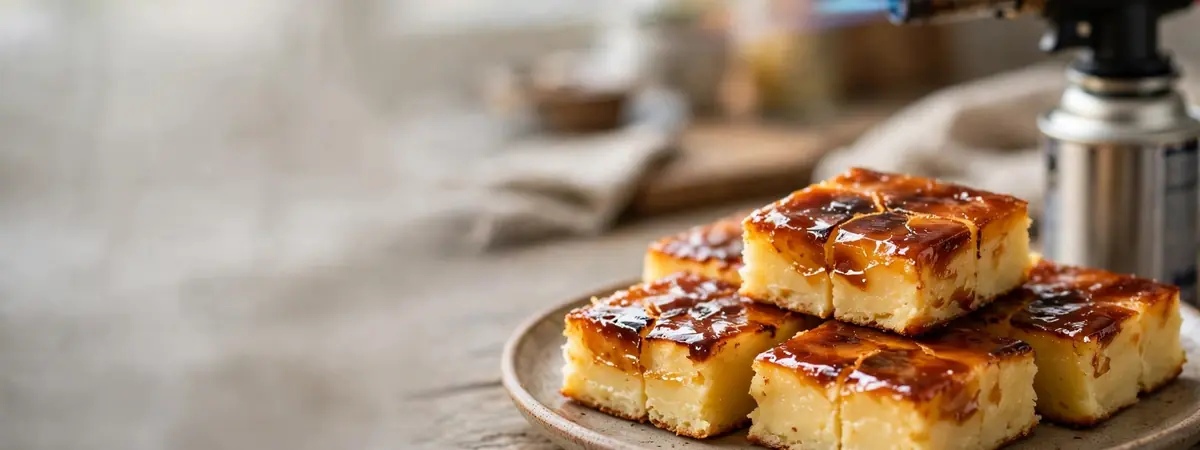
Classic fried milk with a thin, glassy crust of burnt sugar, in the style of a Catalan cream (crema catalana) or a crème brûlée. The contrast between the toasted sugar and the creamy centre makes it a real showstopper.
Heat 750 ml (about 3 cups) of the milk with the citrus peel and the cinnamon; just before it boils, turn off the heat, cover and leave to infuse for 10–15 minutes. Meanwhile, dissolve the cornstarch and sugar in the remaining 250 ml (1 cup) of cold milk, stirring well to avoid lumps.
Remove the peel and cinnamon. Add the cornstarch mixture to the flavoured milk and cook over a medium-low heat, stirring constantly, until thick (about 8–10 minutes). Pour into a tray, press cling film onto the surface, let it cool and refrigerate for at least 3 hours (overnight is best).
Cut the custard into square or rectangular portions. Dip each one first in flour and then in beaten egg, making sure they are well covered.
Fry the portions in hot oil for 1–2 minutes in total, until golden, and drain on kitchen paper. When they are warm rather than hot, coat them in sugar and melt it with a kitchen blowtorch until a thin layer of caramel forms. Serve warm or at room temperature.
Safety: caramel reaches more than 160 °C (320 °F). Use the blowtorch on a heatproof surface, away from tea towels and paper, and let it cool for a minute before serving.
Caramelize shortly before serving: moisture from the custard softens the caramel after a while. A scoop of vanilla or cinnamon ice cream, a few strawberries or slices of mango, or a spoonful of lightly whipped cream all balance the sweetness of the crust. Chopped toasted almonds add extra crunch.
Not really: with the moisture of the custard, the crust softens and turns sticky after a while. Fry the pieces ahead if you like, and caramelize shortly before serving.
The layer is too thick or the flame is too close and still. Use a thin layer, hold the torch a few centimetres away and keep it moving.
Crème brûlée is a baked custard served in a dish. Here the custard is set firm, cut, fried and then given a similar burnt-sugar top.
Read this recipe in Spanish (en español).
Same idea, different routes: pick the version that suits your kitchen.
The classic recipe
Richer and creamier
Silkier and smoother